<< Back
The 8 Best Fermented Foods for Your Health
February 13, 2026
Gut health has been having a moment — and for good reason. From digestion to immunity, what’s happening in your gut affects more than just how you feel after a meal.
And fermented foods are one of the easiest ways to support it.
“These foods contain important bacteria that help support your gut microbiome,” says Ulysses Wu, MD, with Hartford HealthCare.
That can have ripple effects throughout your entire body.
“More diversity in your gut microbiome has been linked to better overall health and protection from many diseases,” Dr. Wu adds.
Wondering where to start? Here are eight fermented foods worth adding to your diet.
1. Kimchi
Spicy, bold and full of flavor, kimchi brings more than just heat to the table.
“Kimchi combines fermentation with vegetables, which means you’re getting probiotics and nutrients at the same time,” Dr. Wu says.
It works as a topping for rice bowls or a quick flavor boost to eggs or soups.
“Some people add it to everything,” Dr. Wu notes. “They might eat it as a side dish or add it to meats or sandwiches. You could substitute it anywhere you would use pickles.”
2. Miso
It’s a fermented soybean paste commonly used in Japanese cooking, but it’s more versatile than you might think.
“Miso contains beneficial bacteria and adds depth of flavor without a lot of calories. I add a little dab of it to everything just to give it a depth of flavor and deeper umami taste,” says Dr. Wu.
Stir it into soups, marinades or dressings. Just avoid boiling it for too long, which can reduce the live cultures.
3. Kefir
Kefir is a fermented drink that’s tangy and easy to enjoy on the go.
“It contains a wider variety of healthy bacteria and yeast than many yogurts,” Dr. Wu says. “It’s also easier to digest.”
You can drink it on its own, blend it into smoothies or pour it over cereal for a probiotic boost.
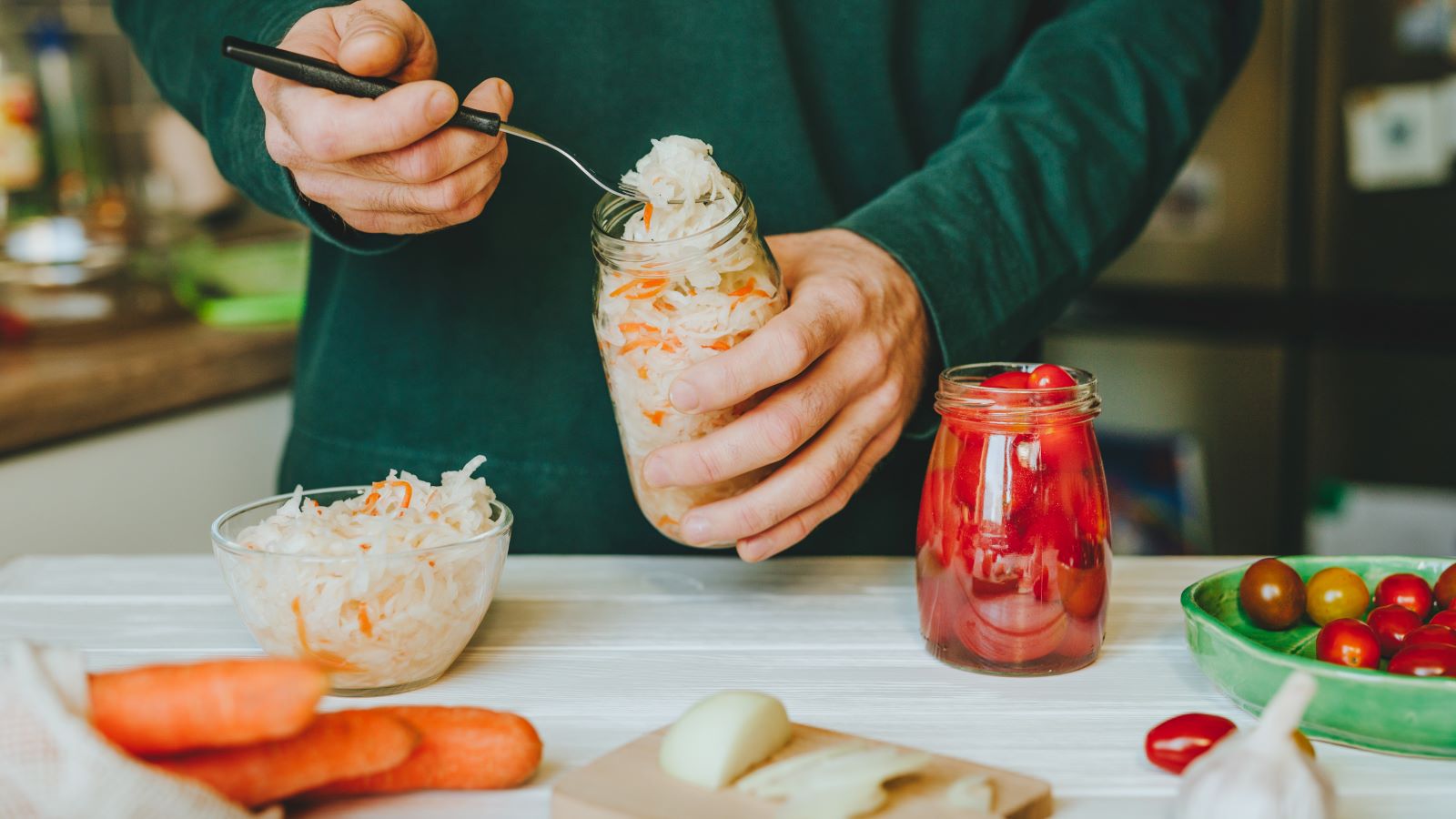
4. Sauerkraut
It’s not just for kielbasa – this fermented cabbage has been a staple of German cuisine for centuries.
“Sauerkraut provides probiotics along with fiber and vitamins,” says Dr. Wu. “Just be keep an eye on the sodium.”
Choose unpasteurized versions in the refrigerated section to make sure those live cultures are still doing their job.
5. Tempeh
Looking for a plant-based protein with probiotic benefits?
“Tempeh is fermented soybeans, which makes it easier to digest and rich in protein,” Dr. Wu notes.
Slice it, season it and add it to stir-fries, salads or sandwiches for a gut friendly meal that can be used as a meat substitute.
6. Kombucha
That fizzy tea you see everywhere? It has offers some real benefits.
“Kombucha contains plenty of probiotics, but some varieties can be high in sugar,” says Dr. Wu.
Stick to small servings and check labels to make sure you’re not undoing the benefits with too much added sweetness. Try using it in mocktails or cocktails in place of any citrus you would add.
7. Yogurt
It’s a breakfast staple for a reason. Yogurt is one of the most accessible fermented foods and a great entry point if you’re new to probiotics.
“Yogurt with live and active cultures can support digestion and help maintain a healthy balance of gut bacteria,” says Dr. Wu.
Look for plain or Greek varieties with minimal added sugar, then dress them up yourself with fruit, nuts or a drizzle of honey.
8. Sourdough bread
It might not be the first fermented food you think of, but sourdough is one of the few grains made from fermented dough.
“The fermentation process helps break down some of the starches and gluten in the bread, which can make it easier to digest for some people,” says Dr. Wu. “It may also have a gentler effect on blood sugar compared to highly refined white breads.”
Look for traditional varieties made with a live starter, and pair it with fiber or protein to balance out your meal.
Make fermented foods work for you
You don’t need to overhaul your diet to see real benefits.
“A little goes a long way,” says Dr. Wu. “Adding small amounts of fermented foods regularly is far more helpful than large amounts once in a while. Stews, soups, marinades and drinks are all great options to experiment with.”
If you’re new to fermented foods, start slow to avoid stomach discomfort, and pay attention to how your body responds.